Book
There are many variations of passages of Lorem Ipsum
There are many variations of passages of Lorem Ipsum
Lorem Ipsum is simply dummy text of the printing and typesetting
This is a short commentary. Today I have other busy activities, but I still wanted to provide a glimpse of the industry in our eastern neighbors.
Germany is an economy with a relatively heavy weight in industry. The German industry has not been doing well for some time. That probably has to do with a few different factors. The general cost level is one of them. German energy costs are especially high.
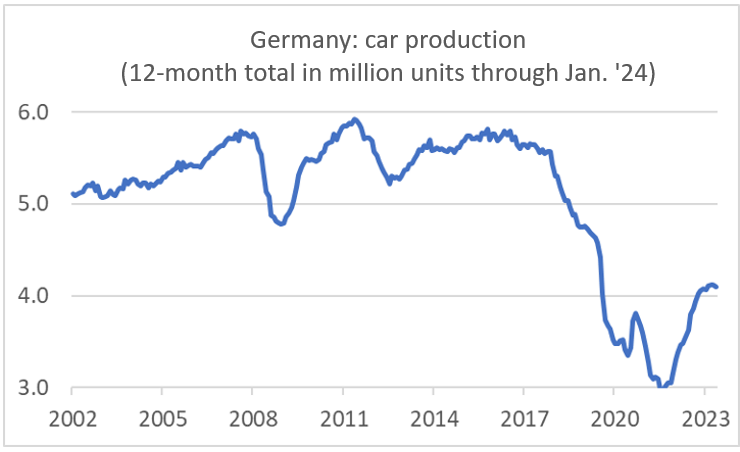
The weakness of the Chinese economy is also a problem for Germany, because the country is an important exporter to China, especially of capital goods. Finally, the German automotive sector has also been under pressure for several years, although it has been cautiously recovering since 2022.
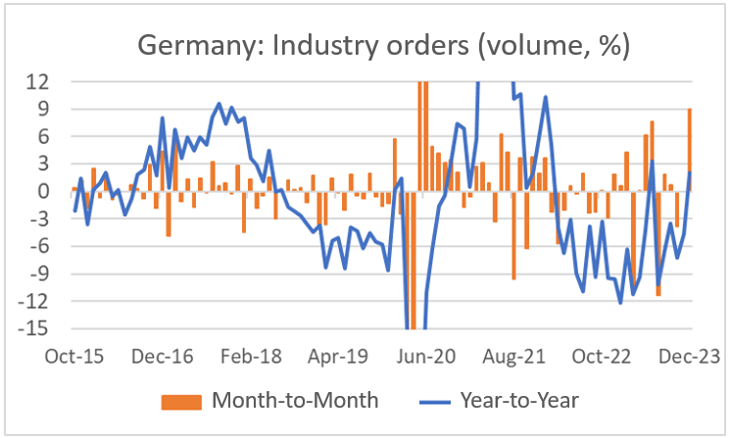
Orders booked by German industrial companies in December were no less than 8.9% higher in volume than in December. As a result, the year-on-year comparison once again increased.
Dummy content: The latest economic indicators provide additional context for understanding the current situation. Industrial activity can be influenced by several temporary and structural factors, meaning that individual monthly figures should be interpreted carefully.
Dummy content: Businesses continue to monitor demand, production costs, export activity, and consumer confidence. These indicators can provide a broader picture of whether the current weakness is temporary or part of a longer-term trend.
Google Translated from Dutch to English. Here is the link to the original article in Dutch. The article was originally published on 09 February 2024.

Leaders often identify a gap between where the organisation is now (As-Is) and where it could realistically be (Should-Be). The question then becomes simple: are you missing an opportunity (Opportunity Cost), or will doing nothing create serious problems (Cost of Inaction – CINA)? In a competitive market, hoping to maintain the status quo is rarely a realistic option.
Yet that is not the whole story. The good figure was mainly due to 'large-scale items'. Orders for aircraft, ships, and trains provided a major boost and such orders are not booked evenly throughout the year.
Orders may show a sharp decline again in January. Excluding these 'large-scale items', order volume fell by 2.2% compared to November.
Domestic orders increased by 9.4%, and orders from other euro countries even increased by 34.5%, but the volume of orders from the rest of the world was 7.5% lower than in November.
Dummy content: Large individual contracts can have a noticeable effect on monthly statistics. When these contracts are recorded during a particular month, the headline figure may appear significantly stronger than the underlying trend.
Dummy content: For this reason, economists often look at several indicators together rather than relying on one monthly result. Comparing different regions and excluding exceptional orders can help provide additional context.
 Source: Macrobond
Unfortunately, the production itself was another sad event in December. Total production fell by 1.6% month-on-month and 3.1% year-on-year in December.
The energy-intensive sectors in particular contributed negatively. There, production fell by 6.3% compared to November and by 4.3% compared to December 2022.
Compared to February 2020, just before the pandemic, the production level in the five most energy-intensive sectors is 23.1% lower.
The ongoing loss of production is very disappointing because energy prices have now fallen significantly compared to the second part of 2022. You would then expect a recovery in production in those energy-intensive sectors. Not so, but the December figure was so bad that it may have been flattering.
Dummy content: Energy costs remain an important consideration for industrial companies. Changes in electricity and natural gas prices can influence production decisions, investment plans, and the competitiveness of companies operating in energy-intensive industries.
Dummy content: The longer-term production trend is therefore particularly important. A temporary monthly improvement may not necessarily indicate a sustained recovery, while a prolonged decline can have broader implications for investment and employment.

Leaders often identify a gap between where the organisation is now (As-Is) and where it could realistically be (Should-Be). The question then becomes simple: are you missing an opportunity (Opportunity Cost), or will doing nothing create serious problems (Cost of Inaction – CINA)? In a competitive market, hoping to maintain the status quo is rarely a realistic option.
As indicated above, the automotive sector is of great importance to German industry. After several years in which production fell sharply, a recovery started in 2022.
Unfortunately, that recovery came to an end in January. Car production fluctuates from month to month. That's why I prefer to look at figures over twelve months.
In January of this year, 4.3% fewer cars were manufactured than in January 2023. Perhaps this is due to unfavorable weather and the upward trend will soon resume. Fingers crossed.
Dummy content: The automotive industry remains closely connected to Germany's broader industrial performance. Changes in vehicle demand, supply chains, technology, and international competition can all influence production levels.
Dummy content: Manufacturers are also adapting their production strategies as the global automotive market changes. These adjustments can affect both short-term production numbers and longer-term investment decisions.
Our industry fared a lot better in December. Although production volume was 3.3% lower than a year earlier, that was the least bad figure since February 2023.
The low point was reached in October with a production decline of 12.0% year-on-year. According to Statistics Netherlands, 6.8% more was produced in December than in November.
Last week, NEVI figures on producer confidence showed that it had become a lot less negative in January. The picture of improvement seems consistent.
Dummy content: Developments in neighboring economies can also have an indirect effect on domestic industrial activity. Germany and the Netherlands maintain strong economic and trade relationships, making developments in German industry relevant for Dutch businesses.
Dummy content: If industrial confidence continues to improve, companies may gradually become more willing to increase production and investment. However, the timing and scale of such a recovery remain dependent on demand and broader economic conditions.
Our economy shrank in the first three quarters of 2023. On Wednesday, CBS will present the first estimate for growth in the fourth quarter and the fourth quarter may also show a small negative.
I am hopeful that we will soon put the period of moderate contraction behind us. Lower inflation helps purchasing power and lower energy prices are also positive for businesses.
Of course, a revival in Germany would be very welcome. Judging from the recent figures for the German industry, we should perhaps not expect too much from this.
Dummy content: The coming months will provide more information about whether recent improvements represent the beginning of a broader recovery. New data on orders, production, exports, and business confidence will be important indicators to follow.
Dummy content: For now, the economic picture remains mixed. Some indicators point toward stabilization, while others continue to show weakness. Looking at several months of data should provide a clearer indication of the underlying direction.
The latest figures provide a mixed picture of German industry. Strong order numbers were partly supported by large-scale orders, while industrial production remained under pressure. The automotive sector also continues to be an important factor in the broader industrial outlook.
For the Netherlands, the December production figures and improving producer confidence provide some positive signals. However, the economic environment remains uncertain, and developments in Germany will continue to be relevant for the region.
Dummy content: Future economic data will help determine whether these early signs of stabilization develop into a more sustained improvement. Until then, monthly figures should be considered alongside longer-term trends.
There are many variations of passages of Lorem Ipsum